Google Pixel 10 Review: The Sweet Spot Smartphone of 2025
When Google launched its Pixel 10 lineup this year, the focus was naturally on the flashy Pixel 10 Pro and the monster-sized Pixel 10 Pro XL. But after spending weeks with the base Pixel 10, I’ve come to believe this is the most balanced and user-friendly phone Google has built in years.
It may not have all the bells and whistles of its bigger siblings, but it offers a premium experience at a lower price. In fact, for many buyers, it’s the most practical Pixel to buy in 2025.
Let’s dive deep into everything the Pixel 10 offers — from design, display, and performance to camera, battery, software, and pricing. By the end, you’ll see why this phone deserves serious attention if you’re shopping for a new flagship smartphone.
Design: Familiar, Compact, and Premium
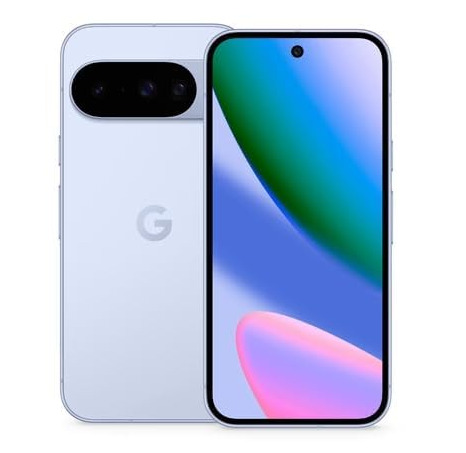
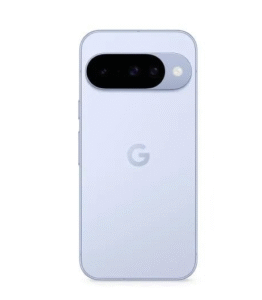
Google Pixel 10 may be the “standard” model in the lineup, but it doesn’t look or feel like a cut-rate phone. Google has carried over the signature Pixel design with its camera bar, clean lines, and premium materials.
-
Size & Weight:
The Pixel 10 measures 6 x 2.8 x 0.3 inches and weighs 7.2 ounces, making it a touch lighter than the Pro but with the same dimensions. If you’ve already bought a case for the Pro, you can swap it onto this phone without issues. -
Finishes:
Google has gone with matte aluminum sides (which resist fingerprints beautifully) and a glossy glass back. Personally, I prefer this combo over the Pro’s glossy frame. -
Colors:
The phone ships in Indigo (deep blue), Frost (light gray), Lemongrass (lime green with gold edges), and Obsidian (dark gray/black). Indigo is the standout for me — classy and bold without being too loud.
The punch-hole front camera sits at the top-center of the display. It’s slightly larger than what you’ll find on some rivals, but after a few days, it stops being noticeable. Bezels are a bit thicker than the Pros, though they don’t spoil the experience.
Bottom line: This is a handsome, premium-feeling phone that doesn’t cut corners just because it’s the base model.
Display: Bright, Smooth, and Feature-Packed
Google Pixel 10 with a 6.3-inch OLED panel that hits the sweet spot between compact and roomy. While the Pro XL delivers higher brightness and a wider variable refresh range, the Pixel 10 holds its own in daily use.
-
Resolution: Locked at Full HD+, unlike the Pro models which let you toggle between native and “High” resolutions. Still, it’s sharp and vibrant.
-
Refresh Rate: 60–120Hz adaptive refresh. Not as battery-friendly as the Pro’s 1Hz–120Hz range, but smooth enough for scrolling, gaming, and animations.
-
Brightness: Slightly dimmer than the Pro XL (about 10% less), but still perfectly usable outdoors in full sunlight.
-
Adaptive Features:
-
Adaptive Tone (warms or cools display to match ambient light)
-
Adaptive Brightness
-
Always-On Display
-
Scheduled Dark Mode
-
Smart Pixel Screensaver (turns your phone into a mini smart display when charging)
-
For most users, this display is fantastic. I bumped up the font size for my middle-aged eyes, and aside from occasional quirks with poorly optimized apps like Facebook or Instagram, it’s been a joy to use.
Performance: Tensor G5 at the Core
Like its siblings, the Google Pixel 10 runs on Google’s custom Tensor G5 processor. This isn’t a cut-down chip (unlike Apple’s strategy with base iPhones). You get the same core performance across the lineup.
That said, there are differences:
-
RAM: 12 GB (vs. 16 GB on the Pros).
-
Storage:
-
128 GB (UFS 3.1, slower)
-
256 GB (UFS 4.0, faster)
-
Here’s the problem: 128 GB in 2025 feels cramped. Android 16 itself uses around 11 GB, while on-device AI models (AICore) take up another ~7 GB. After installing my regular set of apps and a few offline audiobooks, half the storage was already gone. If you’re even a semi-heavy user, you must go for the 256 GB model.
-
Day-to-Day Use:
Smooth, responsive, and stable. No random lags or overheating. -
Gaming: Call of Duty Mobile, Asphalt, and Genshin Impact all run smoothly. But the smaller display makes long sessions less comfortable.
-
AI Tasks: Ironically, this is where Tensor still lags Qualcomm’s Snapdragon processors. Simple photo edits (macro, zoom shots) take 2–3 seconds to process, while Samsung’s Galaxy S25 handles them instantly.
Is it a dealbreaker? No. But it shows that Google’s in-house chip still isn’t the AI powerhouse it was hyped to be.
Connectivity: Future-Ready (Mostly)
The Google Pixel 10 checks almost every connectivity box:
-
5G: Both Sub-6 and mmWave support.
-
Wi-Fi: 6E (the Pros have Wi-Fi 7).
-
Bluetooth: 5.4 (excellent for earbuds, wearables, and accessories).
-
USB-C: 3.2 Gen 2 at 10 Gbps (faster than the iPhone 17’s USB 2.0).
-
UWB & Thread: Missing from the Pixel 10, but included in the Pro models.
For most people, this won’t matter. Unless you rely heavily on UWB for precision Find My or Thread for smart home mesh networking, the Pixel 10 won’t feel limited.
Audio & Video: Good but Not Pro-Level
-
Speakers: Dual stereo setup. Loud enough at ~70% volume, but gets distorted if pushed to max.
-
Headphones: Great with Pixel Buds Pro 2 (supports spatial audio).
-
Video Playback: Netflix, YouTube, and Prime Video look sharp and colorful on the OLED.
The Pro XL has slightly richer stereo balance, but unless you’re comparing side by side, you won’t notice.
Cameras: Surprisingly Powerful for a Non-Pro
The biggest surprise? The Pixel 10 finally gets a triple-camera setup.
-
Main Camera:
-
48 MP (wide)
-
f/1.7, OIS, PDAF
-
Delivers stunning shots in nearly all lighting conditions.
-
-
Ultrawide:
-
13 MP, f/2.2
-
Slight downgrade from Pixel 9’s 48 MP ultrawide, but practically fine.
-
-
Telephoto:
-
10.8 MP, f/3.1
-
5x optical zoom, up to 20x Super Res Zoom.
-
A huge win compared to last year’s Pixel 9, which lacked telephoto altogether.
-
-
Selfie Camera:
-
10.5 MP ultrawide
-
Night Sight and Top Shot supported
-
Good enough, though not as sharp as the Pro’s 42 MP selfie cam.
-
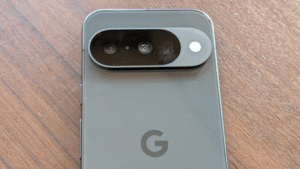
Camera App Experience
The Pixel 10 lacks Pro controls. That means:
❌ No RAW capture
❌ No manual shutter/ISO
❌ No full-res shooting
But for most users, this is a good thing. Google’s AI-assisted camera does the heavy lifting, giving you stunning photos with zero effort.
Special features include:
-
Camera Coach (learn to take better photos)
-
Auto Best Take (perfect for group shots)
-
Add Me (lets you join group photos taken by someone else)
-
Low-Light Boost in Instagram Stories
Simply put: This is one of the best smartphone cameras in its class.
Security: Strong as Ever
-
Face Unlock & Fingerprint: Both fast and reliable.
-
Titan M2 Security Chip: Hardware-level protection against malware and phishing.
-
Google VPN: Included for free.
-
Advanced Protection Mode: Adds theft protection and tighter security policies.
Face Unlock still struggles in the dark or when you’re wearing sunglasses, but overall security is top-notch.
Battery & Charging
The Google Pixel 10 packs a 4970 mAh battery, the same as the Pixel 10 Pro.
-
Real-world life: About a day with moderate use, but expect to top up during heavy photo-taking or travel.
-
Charging:
-
30W wired
-
15W wireless (Qi 2 / Pixelsnap)
-
No reverse wireless charging
-
Compared to Samsung’s Galaxy S25+, charging is slower, but not painfully so.
Software: Pixel Magic with Android 16
This is where Pixel truly shines. Out of the box, you get Android 16 with all of Google’s Pixel-exclusive features:
-
Gemini AI Integration (chat, live assistance, writing help)
-
Pixel Studio with Imagen 4 (creative AI tools)
-
Magic Cue (real-time call assistance)
-
Recorder App Music Creation
-
Pixel Journal App
-
Material Expressive 3 Design
One gripe: Google still forces the At a Glance widget and search bar on the home screen. Apple now allows more customization, so Google really needs to catch up here.
Also note: Unlike the Pros, the Pixel 10 does not include a free year of Google AI Pro ($240 value).
Price & Value
-
128 GB model: $799
-
256 GB model: $899
This makes the Pixel 10 slightly pricier than the iPhone 17, which gives you 256 GB for $799. That’s a tricky competitive point.
Against Samsung:
-
Galaxy S25 (128 GB, $849)
-
Galaxy S25+ (256 GB, $999)
The Pixel 10 is well-positioned, but I recommend waiting for a sale or trade-in deal. Google often runs aggressive discounts, especially during Black Friday or when iPhones launch.
Final Verdict: The Pixel for Everyone
After weeks of daily use, I’m honestly surprised at how much I like the Google Pixel 10. I usually buy “Pro” models for their bigger screens and fancier cameras. But this phone has never felt like a compromise.
✅ The camera is world-class for everyday use.
✅ The software experience is unmatched in the Android world.
✅ The design feels premium despite being the “entry-level” Pixel.
Yes, the 128 GB model is too limited, and yes, it misses a few extras (Pro AI subscription, Wi-Fi 7, UWB, Thread). But for $799–$899, this is one of the best-value flagship phones in 2025.
If you want a Pixel this year but don’t need every single Pro feature, the Pixel 10 is the sweet spot. It’s the phone that delivers what most people want, without the premium price tag.
At-a-Glance: Pros & Cons
Pros
✔️ Triple rear camera system with stunning results
✔️ Compact yet premium design
✔️ Google’s best AI features built-in
✔️ Excellent value vs. Pro models
Cons
❌ 128 GB is not enough storage in 2025
❌ No free Google AI Pro year (worth $240)
❌ Slightly weaker battery life than rivals
Recommendation:
Buy the Pixel 10 if you want the best mix of price, features, and performance in the Pixel lineup. Go for the 256 GB version — it’s worth the extra $100.